
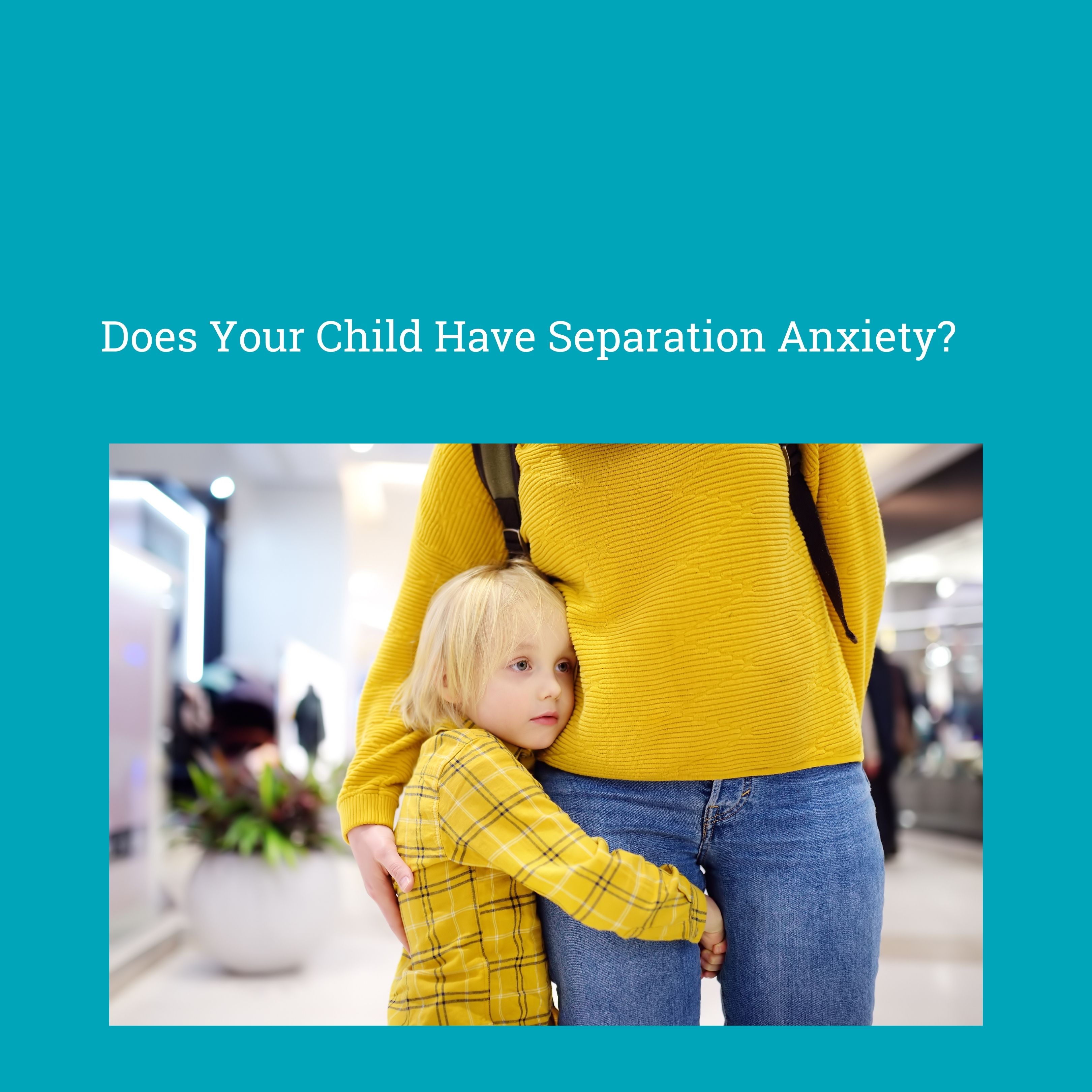
Does Your Child Have Separation Anxiety?
Separation anxiety tends to appear in infants around the age of 6-10 months. This is around the age when babies start to be more aware of their surroundings, and that includes when their parents are present — or not. Most toddlers outgrow this, but for some children with anxiety, separation anxiety can continue on well into the elementary school years.
In this blog, we explore the signs of separation anxiety and tips for helping your child feel better.
Signs Your Child Is Dealing with Separation Anxiety
 According to the DSM–IV–TR, separation anxiety is defined as:
“An anxiety disorder occurring in childhood or adolescence that is characterized by developmentally inappropriate, persistent, and excessive anxiety about separation from the home or from major attachment figures. Other features may include marked anticipatory anxiety over upcoming separation and persistent and excessive worry about harm coming to attachment figures or about major events that might lead to separation from them (e.g., getting lost).”
Red flags of separation anxiety in kids include:
- Refusing to go to school
- Fear of being alone
- Fear of going to bed alone (without you)
- Nightmares
- Physical symptoms, including vomiting, headaches, nausea, stomach pain)
In addition, the DSM–5 also notes that the symptoms must be present for at least 4 weeks in children before a diagnosis can be reached. Adults can also be diagnosed with separation anxiety, but their symptoms must be present for at least 6 months.
Top Tips on How to Ease Your Child’s Separation Anxiety
 Use transitional objects
Transitional items help your child feel safe because they are a symbol of you. Your child connects the object to you and can feel reassurance. Examples of transitional objects include:
- A locket with a picture of you or your family (certain sellers on Etsy can also engrave special messages on lockets)
- Favorite blanket (spritzed with calming essential oils for extra calm vibes)
- A stuffed toy (with a recording of your voice)
Older children may not like a soft blanket or stuffed toy, but hand-written notes, a shared sweatshirt, or a locket can be beneficial for older children.
Acknowledge your child’s fear but stay positive
It’s good to acknowledge your child’s fears, but it’s equally important to continue to talk in a positive, calm manner. If your child senses that you are worried/fearful, it can add to his or her fears. Children easily pick up your own emotions, and it can impact their reactions too. Let your child know what will happen when you are gone, whether that’s an out-of-town work trip, a regular day at the office, or a quick trip to the grocery store.
Create a short and sweet goodbye ritual
Whether you’re dropping off your child at daycare, school, or the sitter’s house, it’s important to say goodbye. Skipping out without a proper goodbye can compound your child’s fears. That being said, goodbyes that very long can also prolong the transition and the lingering anxiety.
The best solution is a short and sweet goodbye. Examples include:
- A special handshake
- Butterfly kisses
- A hug and a special phrase (example: I love to the moon and back)
The Bottom Line
While some anxiety is normal when saying goodbye, untreated separation anxiety (or another type of anxiety disorder) can impact your child’s ability to function at home or school. If you spot the signs of age-inappropriate clinginess, tantrums, withdrawal from family or friends, preoccupation with intense guilt, refusal to go to school, excessive fear of leaving the house, or stomach pains/nausea, your child might benefit from an anxiety evaluation.
The good news is that separation anxiety, like all anxiety disorders, can be treated. Common treatments for anxiety include talk therapy, play therapy, counseling for the family, and in some cases, medication. Your therapist can also recommend the right lifestyle changes (such as changing up your goodbye ritual or making a locket) that can help your child.
NextStep2MentalHealth provides adolescent (and adult) mental health care, and our multidisciplinary team is dedicated to helping parents and their children with their mental health needs. Call us for an appointment or simply use our online scheduling tool.
Related Posts
Depression in Children and Adolescents
Children and adolescents be affected by depression. It is less commonly diagnosed...

5 Easy Ways to Prepare Your Child for a Telehealth Visit
Is your child new to telemedicine? Here at Next Step 2 Mental Health, we are...