
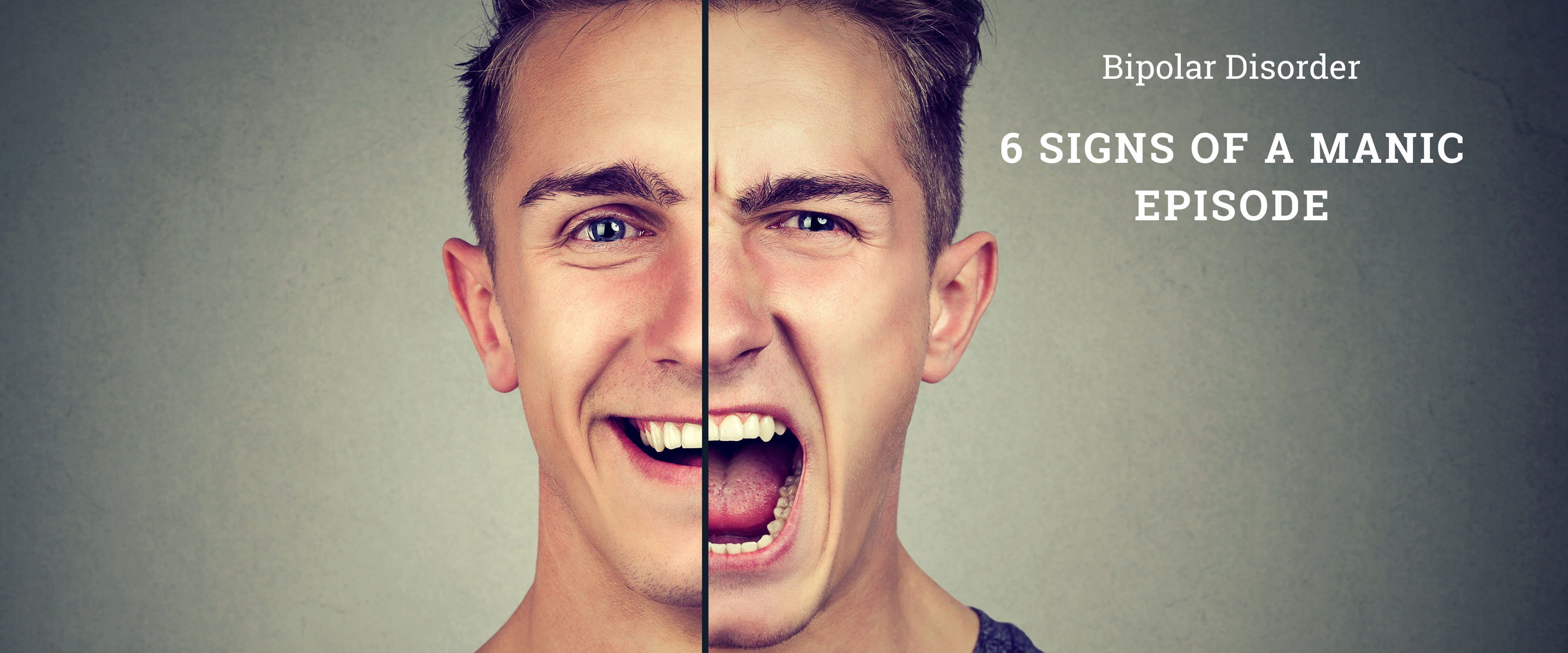
What Is a Manic Episode?
Bipolar disorder affects 4.4% of all adults at some point throughout their life, and about 2.8% of adults have been diagnosed with bipolar disorder in the last year, according to the National Institutes of Mental Health. Out of the adults diagnosed with bipolar disorder, nearly 83% experience extreme disruptions to their daily routines. Bipolar disorder is a mental health illness characterized by extreme shifts in mood that vacillate between manic episodes and depressive episodes, although each episode impacts your quality of life differently.
If you or a family member are newly diagnosed with bipolar disorder, you might have questions about what each episode is. In this article, we’ll help shed light on what manic episodes are and what you can do to reduce their impact on your quality of life.
What Is a Manic Episode?
According to the American Psychiatric Association’s Diagnostic and Statistical Manual of Mental Disorders (DSM-5), a person must have experienced at least one episode of mania or hypomania in order to be diagnosed with one of the bipolar disorders (in addition to the depressive episodes too.) A manic episode is more than just a mood swing. It is an emotional state in which a person may feel elevated or even irritable. Manic episodes can last anywhere from four days to a few months.
At first, you might not think that an elevated mood is a bad thing, and because of this, many people might not seek help at first. However, it’s important to note that mania isn’t just “feeling good”; rather, these symptoms are a departure from what’s normal for your i.e., your normal actions or behaviors.
Mania can be so intense that it can impact your performance at work and interferes with your relationships with friends and family.
Signs of a Manic Episode
Dr. Briscoe continues, “During [a manic episode], the person may experience excessive amounts of energy, a decreased need for sleep, euphoria (an unnaturally elevated mood), irritability, and/or excessive involvement in projects or activities. These are just examples, and not everyone shows every symptom.” Below, we’ll take a look at the common, observable signs of a manic episode.
1.Decreased Need for Sleep
Depression — whether that’s seasonal affective disorder, major depression, or a bipolar depressive episode — can increase your need for sleep. However, a person in the midst of a manic episode may demonstrate little need for sleep. He or she may go to bed and wake up just an hour or two later, wide awake and ready to continue on a project or activity. Increased energy is listed as the primary criterion for bipolar disorder, according to this study.
2. Racing Thoughts
This is another common sign of a manic episode. Racing thoughts can also lead to increased speed at which your loved one is talking.
3. Easily Distracted
All of those racing thoughts can lead to another sign of mania called flight of ideas. To keep up with the racing thoughts, the mind seems to jumps quickly from one idea to the next. This can make your loved one appear to be easily distracted.
4. Engaging in Activities that Hold the Potential for Painful Consequences
Risky behaviors include unrestrained shopping sprees, gambling, making foolish business investments, or even hypersexuality. Risky behaviors can include illicit behaviors, but it’s not limited to them. For instance, an unrestrained shopping spree could be considered a sign of a manic episode, particularly if you’re normally not a shopper.
5. Increased Irritability and Hostility
During a manic episode, it’s normal to feel elevated and happy and good, but it’s also normal to feel irritable. However, if you notice that a loved one is acting aggressively or mentioning thoughts about suicide, it’s important to recognize these signs as a mental health emergency.
Seek immediate psychiatric care if you or a loved one notice hostility or concerns about suicide.
The National Suicide Prevention Lifeline is a United States-based suicide prevention network of over 160 crisis centers that provides 24/7 service via a toll-free hotline with the number 1-800-273-8255. It is available to anyone in suicidal crisis or emotional distress.
6. Delusions of Grandeur
Delusions of grandeur are spurred by an inflated sense of self. Examples of delusions of grandeur include:
- Quitting your job suddenly to run for a political office in your state
- Keeping the notion that you are friends with a celebrity
How do you know if a thought is a delusion of grandeur? Remember, mania departs from what is normal behavior for you or a loved one. For example, if your loved one has always been interested in politics and has pursued a career in politics, then running for a political office isn’t out of the ordinary. However, if your loved one has never been interested in politics and then quits his job suddenly, that could be a red flag.
7. Focus on Goal-Oriented Tasks
You might notice your loved develop an obsession for a specific activity or project. It’s normal to feel excited about a project you’re passionate about, but the difference here is that during mania the hyperfocus on the task interferes with your daily life. For example, you might so focused on a specific project that you miss work or skip out on familial obligations to focus on the task at hand.
Why Treatment Matters for Manic Episodes
 “One of the most dangerous aspects is that multiple untreated manic or hypomanic episodes can be very harmful to the brain. They can sometimes even lead to cognitive impairment and/or decreasing IQ over time. (This can happen because leaving mania untreated is a lot like running a car eighty miles an hour all day, every day. Eventually the motor—the brain—will break down.),” says Dr. Brian Briscoe.
The right treatment can also:
- Improve the quality of your life
- Can help you engage in relationships
- Can better equip you to succeed in the workplace
- Help stabilize mood changes and reduce symptoms
- Help prevent future manic or depressive episodes from occurring and reduce their overall intensity
Treatment for Manic Episodes
The primary treatments for bipolar disorder include medications (including mood stabilizers and antipsychotics) and psychotherapy to control symptoms.
In addition to psychiatric care, there are many lifestyle changes that can support your mental well-being. This includes maintaining a regular exercise schedule, following a balanced, nutrient-dense diet, and attending your therapy sessions.
In addition, it’s essential to adhere to your recommended medication schedules. If you need help remembering to take medication, try setting a reminder on your phone.
The Right Treatment Can Help
If you, or someone whom you love, are struggling with Bipolar Disorder, we can help. To make an appointment, call our office at 502-339-2442 or get in touch with us at to book an appointment with one of our compassionate and non-judgmental providers.
And please, if you’re not comfortable getting help from us, get help from another qualified doctor or therapist.
Because you can count on this: Life and the future, even with bipolar disorder, can and will be much brighter with treatment.
Learn More
Bipolar Disorder and Depression: What You Need to Know
Nearly 6 million Americans are impacted by bipolar disorder every year. In terms of percentages, that’s about 2.6% of the adult population — 2.6% of all adults who struggle with the lows of bipolar depression and the highs of a manic episode.
At the Next Step 2 Mental Health, our team is experienced in diagnosing depression. This is important because there are many types of depression, including seasonal affective disorder, major depressive disorder, postpartum depression, and bipolar depression. Your treatment varies depending on what type of depression you have.
Below, we cover what manic depression is — and how it differs from other types of depression.
What Is Bipolar Depression?
Before we look at what bipolar depression is, let’s look at the many types of bipolar disorder. The following are different types of bipolar disorder:
- Bipolar disorder I
- Bipolar disorder II
- Cyclothymia
Regardless of which type of bipolar disorder you have, the disorder is characterized by shifts in your mood that cycle between manic (or even hypomanic) episodes and depressive episodes. Manic episodes refer to cycles in mood characterized by high energy and inappropriate levels of euphoria. It’s also possible to experience illusions of grandeur, decreased need for sleep, and irritability. Bipolar depression refers to the other shift in the pendulum; bipolar depression is the depressive episodes that are part of bipolar disorder.
Major Depressive Disorder Versus Bipolar Depression
Major depressive disorder, postpartum depression, seasonal affective disorder, and bipolar depression share many of the same symptoms. Symptoms of depression (regardless of which type you have) may include:
- Intensified feelings of sadness
- Changes to your normal eating patterns (i.e. eating more or less)
- Changes to your sleeping patterns (i.e. insomnia and the need for more sleep)
- Feelings of helplessness or hopelessness
- Increased fatigue and lack of energy
- Loss of passion for your favorite hobbies
- Difficulty focusing
- Decision fatigue
You may be wondering how you can tell the difference between major depressive disorder and bipolar depression. The main difference is that people with major depressive disorder don’t experience mania. Individuals with bipolar disorder experience cyclic shifts between depressive and manic episodes. According to the experts at Harvard Health, manic episodes may last two to four months, while the depressive episodes can last eight months or longer. Some people may assume they have major depressive disorder, especially if they had a more mild manic episode. This is just another reason why it’s so important to have an accurate diagnosis — to make sure you’re treating the right condition.
Can Major Depressive Disorder Turn into Bipolar Disorder?
No, a major depressive disorder can’t turn into bipolar disorder, but it’s possible that you mistake bipolar depression for a major depressive disorder, especially if the manic (or hypomanic) episodes were mild.
The takeaway: If you experience any depression-like symptoms, it’s important to seek help from one of our experienced providers, such as Dr. Brian Briscoe, who understands all of the complexities of manic depression.
How Is Bipolar Depression Treated?
Because depression can be linked to several different mental health illnesses, it’s vital to start with an accurate diagnosis — major depressive disorder or bipolar disorder. While there isn’t a cure for bipolar depression, our team of experienced professionals can help you feel better and regain a sense of normalcy through medications and psychotherapy.
Call our office today at 502-339-2442, or book an appointment online.
Learn More
What is Bipolar Disorder?
One of the most dangerous aspects is that multiple untreated manic or hypomanic episodes can be very harmful to the brain. They can sometimes even lead to cognitive impairment and/or decreasing IQ over time. (This can happen because leaving mania untreated is a lot like running a car eighty miles an hour all day, every day. Eventually the motor—the brain—will break down.)
Learn More
What is Mental Health?
Mental health is the state of well-being in which people understand their own potential, are capable of dealing with life’s stresses and challenges,
Learn MoreBipolar Disorder affects high functioning people too
Bipolar Disorder is characterized by a tendency to experience distinct episodes of mania or hypomania and sometimes episodes of depression.
Learn More